Leaving a Legacy for the Next 75 Years
Sanctuary Restoration Project

ORGAN REPORT to the BOARD of TRUSTEES | July 2025
My hope and prayer are that our shared goals remain clear: to provide Northside Church with a pipe organ that fully supports the heart of our worship and music ministry—an instrument capable of leading congregational singing and choral accompaniment with clarity and beauty. We aim not only to meet the needs of today but also to thoughtfully address the ongoing challenges we’ve experienced over the past 40 years with our current instrument. This is an opportunity to invest in a lasting musical resource that will serve our church faithfully for generations to come.
— Joshua McClure, Director of Worship & Organist
The following summary outlines our journey in understanding the challenges and exploring possible solutions for Northside’s organ over its 43-year history. This report provides context for why the current instrument struggles to meet the needs of our worship and music ministry—particularly in its primary role of accompanying congregational singing and the choirs at Northside.
While some may not immediately perceive a difference, those who sing, play, or listen with musical sensitivity—especially our musicians who rely on the instrument each week—can attest to its limitations. I’d even make the case that those who do not consider themselves inherently musical notice these shortcomings as well. What follows is a history of the organ, from the work of the original organ committee to the efforts of the current reestablished team in May 2025.
Before we get into the report and history of Northside’s organ, here are some helpful terms and definitions to give you a better understanding of what you’re about to read:
• Console: is the control center where the organist plays the instrument. It includes the keyboards (manuals), pedalboard, stops, and other controls used to play and shape the organ’s sound.
• Manuals: a keyboard on an organ that is played with the hands. Most organs have one or more manuals, each controlling a different set of sounds or divisions of the organ.
• Pedals: are a large keyboard at the base of the organ, played with the feet. They typically control the lowest-pitched notes of the instrument and are used to provide a strong bass foundation in the music.
• Pipes: are tubes that produce sound when air flows through them. Each pipe plays one pitch, and they come in many sizes and shapes to create different tones. They are typically made from metal (such as tin and lead alloys) or wood, depending on the sound and design needed.
• Stops: are controls that turns on a specific set of pipes (or digital sounds), each with its own unique tone. Stops let the organist choose different sounds and combine them to create a variety of musical effects.
• Divisions: is a group of pipes controlled by a specific keyboard or the pedalboard. Each division has its own unique sound and purpose, such as accompanying, soloing, or supporting the overall organ tone. Our organ has four divisions: Great, Swell, Positive, and Pedal.
• Windchest: is the part of a pipe organ that holds and supplies air to the pipes, allowing them to produce sound when a key is pressed.
• Flower Boxes: is an exposed windchest located outside the main organ chamber, often mounted on a ledge or beam. It holds a limited number of pipes— typically for a specific division or tonal effect—and is used to help project sound more directly into the room. Its name comes from its box-like shape and visible placement, resembling a flower box on a window.
• Organ Action: refers to the mechanism that connects the keys and pedals to the pipes, allowing them to sound. Main types of organ action:
o Tracker (mechanical): Direct physical connection between keys and pipes.
o Pneumatic: Uses air pressure to control the pipes.
o Electro-pneumatic: Uses electricity to control air valves.
o Direct electric: Uses electrical signals to open the pipe valves directly.
• Organ Chamber: is an enclosed space where the organ’s pipes and mechanical parts are housed. These rooms help project sound into the chancel through large openings. Our current organ has two chambers, located on either side of the chancel.
• Swell Enclosure: is a box with movable shutters that holds some of the organ’s pipes. The shutters open and close to make the sound louder or softer, allowing for dynamic expression during playing. We have one swell enclosure located on the lectern side (north side) of the chancel.
• Analog: is an electronic instrument that uses analog circuits to imitate the sound of a pipe organ. These were common before digital sampling became the standard.
• Digital Voices: are recorded sounds of real pipes that are played through speakers. They are used to expand or enhance the organ’s sound, especially when space limits the number of actual pipes.
• Hybrid Organ: is a combination of real wind wind-blown pipes with digital voices, blending traditional pipe sound with modern digital technology
• Organ Reform Movement: was a 20th-century effort to return to the sound and design of Baroque-style organs, which featured clear, bright tones and crisp articulation—ideal for early music like that of J.S.Bach. The movement moved away from the richer, smoother, and more blended sounds of Romantic-style organs, which were popular in the early 1900s and suited for lush, expressive music. It also favored the use of mechanical (tracker) action over electric or pneumatic systems.
Northside Church’s sanctuary was constructed in 1957. During the planning stages, the church solicited proposals from several prominent American organ builders, including Aeolian-Skinner, Austin, Möller, Reuter, Schlicker, and Wicks. Ultimately, the church selected an analog Allen organ for its initial installation. In 1982, Northside installed its first pipe organ—a three-manual, 37-stop instrument built by the Möller Organ Company of Hagerstown, Maryland and installed by a regional representative.
It is highly unusual for an instrument to undergo substantial tonal revisions so soon after installation; however, significant modifications were made to the organ just three years later, in 1985.These included relocating existing pipework and incorporating vintage pipes from Möller’s stock. In 2003, the organ console’s action was upgraded from pneumatic to a solid-state system, necessitating rewiring between the console and the windchests. At that time, digital voices—specifically for pedal stops and chimes—were added to supplement the pipework’s limited bass response in the nave. Only 30 years after its installation, the entire organ chest action was re-leathered in 2012 and 2013. Today, the organ comprises 47 stops.
It is also worth noting that, in the late 1990s, the church gave serious consideration to adding an antiphonal organ on the rear balcony wall. Multiple bids were solicited from organ companies in response to ongoing concerns that the existing side-chamber installation did not adequately project sound into the nave to support congregational singing. Additionally, the church requested and received formal proposals for a new instrument in both 2002 and 2016.
The M.P. Möller Pipe Organ Company was founded in 1875 by Danish immigrant Matthias Peter Möller in Hagerstown, Maryland. It grew to become one of the largest and most prolific organ builders in the United States, known for its mass production techniques, installed instruments nationwide in churches, concert halls, and institutions.
The company experienced its greatest period of success during the 1920s and the post–World War II era through the 1960s. In the 1920s, Möller capitalized on the booming demand for theater organs in silent movie houses, employing a workforce of up to 400. The company continued to thrive from the 1940s through the 1960s, building larger and more advanced instruments and expanding its reach by acquiring another organ firm in 1944. A notable installation from this era includes the organ at the Basilica of the National Shrine of the Immaculate Conception in Washington, D.C.
The decline of the M.P. Möller Pipe Organ Company—once the largest pipe organ builder in the United States—began in the 1970s and worsened throughout the 1980s. Economic pressures, including a reliance on customer deposits and a sharp decline in orders during the early 1990s recession, placed the company in a precarious position. Möller also struggled to modernize its aging facilities and was slow to adopt emerging technologies such as solid-state electronics. Increased competition from more affordable and convenient electronic organs further eroded its market share. These combined factors ultimately led to the company’s closure in 1992, marking the end of a 117-year legacy in American organ building.
Northside’s new pipe organ, custom-built by the Schantz Organ Company of Orrville, Ohio, is being designed first and foremost to lead congregational singing and support worship for generations to come. Conceived as one cohesive musical design from the very beginning, the instrument will feature 53 stops, 62 ranks, and 3,738 pipes, including a new Antiphonal division at the back of the sanctuary to help surround and support the congregation in hymn singing. By placing portions of the organ at both the front and back of the sanctuary, the design will allow sound to carry more clearly and evenly throughout the room, creating a fuller, more supportive foundation for worship.
A hallmark of the organ will be its warmth, flexibility, and expressive capability in worship. Two divisions will be enclosed behind movable wooden shutters called “swell shades,” allowing the organist to shape the sound from soft and prayerful to full and triumphant. A new movable console with modern technology will support worship, concerts, rehearsals, and music ministry for years to come.
Founded in 1873, Schantz remains one of the few American organ builders to craft all of its own pipes in-house, allowing this instrument to be carefully tailored to Northside’s sanctuary and worship needs.
Throughout scripture, God’s people are called to offer their first fruits to God and to pass faith from one generation to the next. This new organ is more than an instrument — it will accompany our congregation through weddings and funerals, Christmas and Easter, baptisms and confirmations, and countless Sundays in between. As scripture reminds us, “One generation shall commend your works to another” (Psalm 145:4).
Current Organ Issues
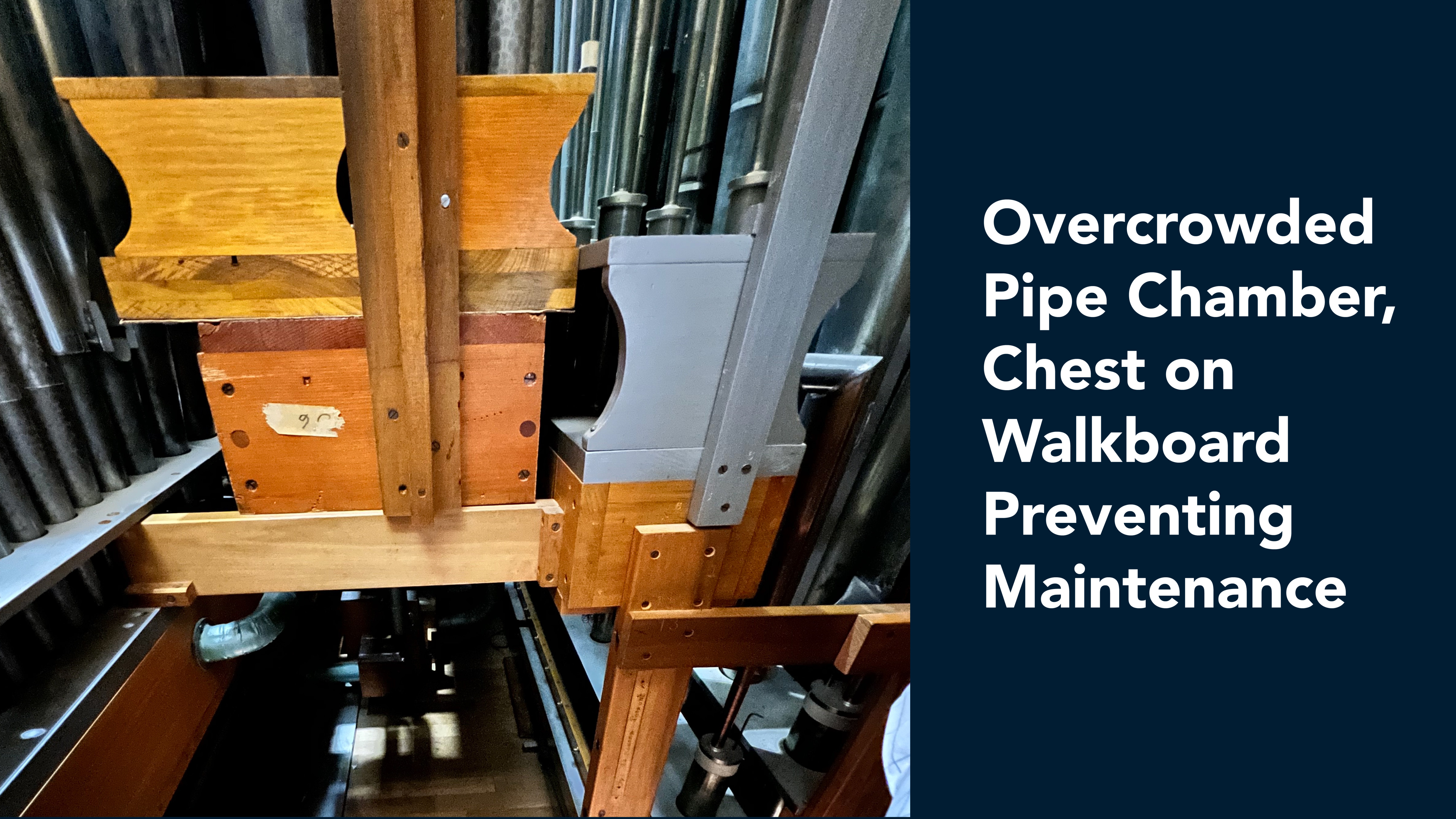
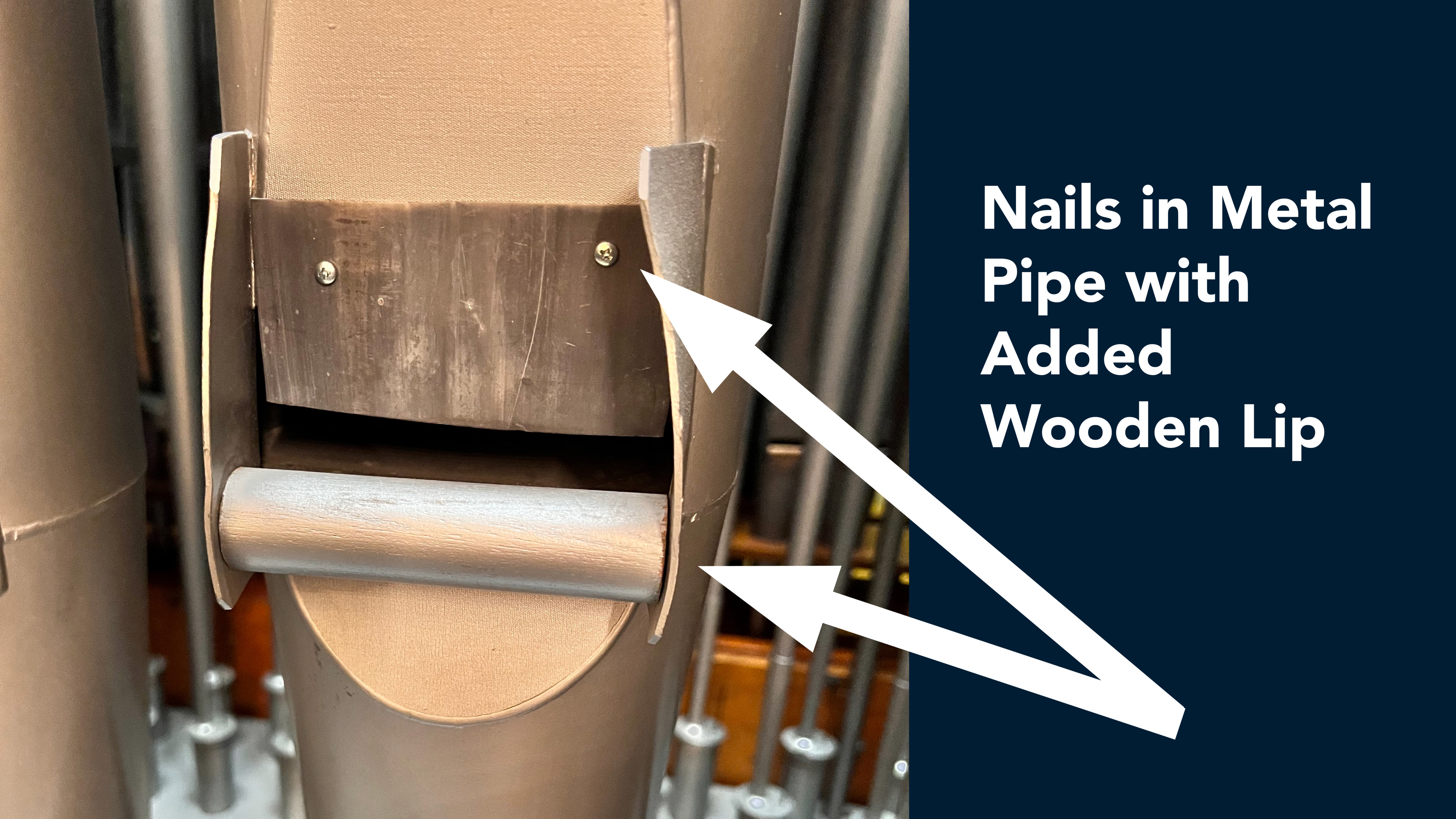
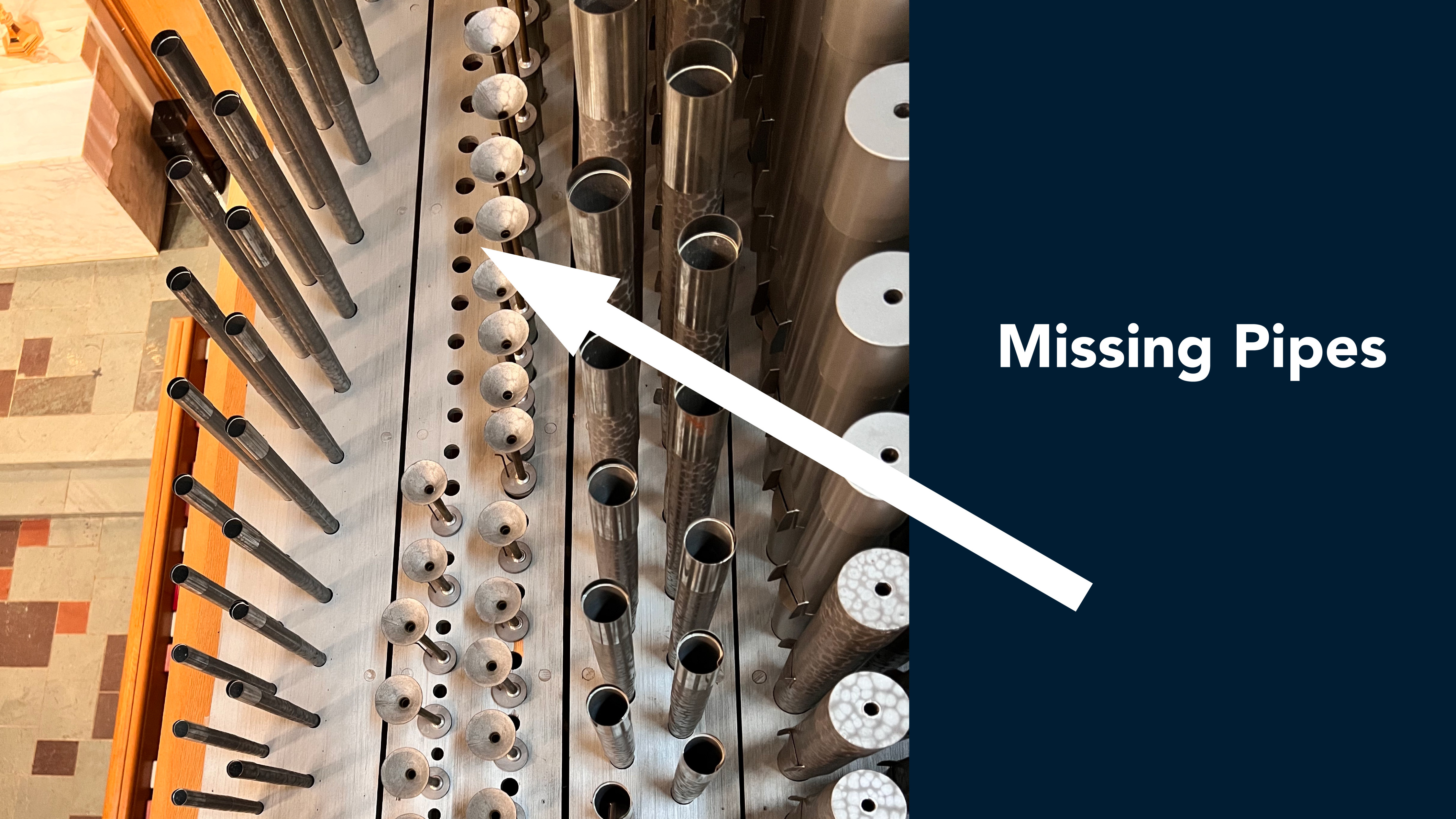
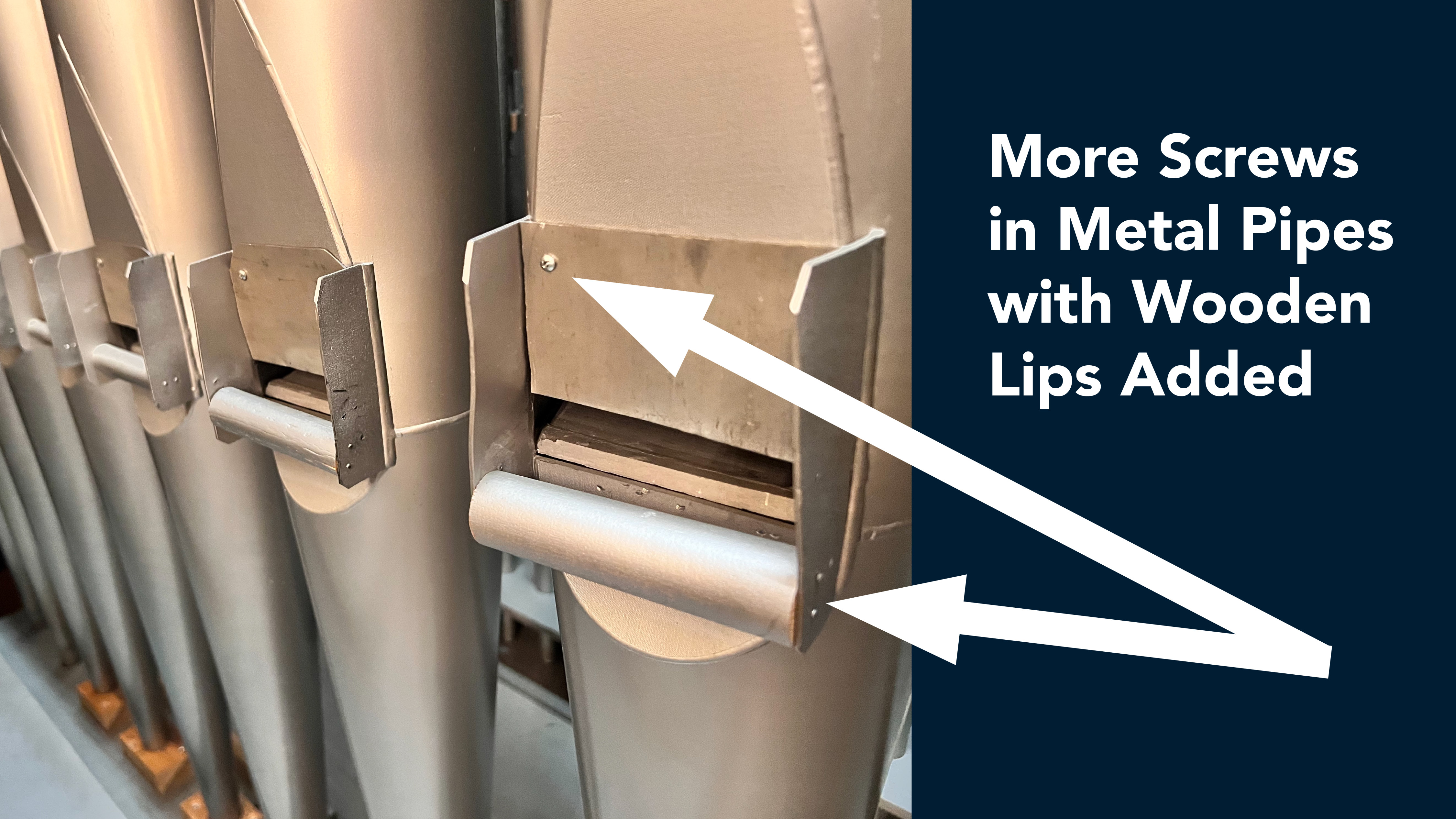
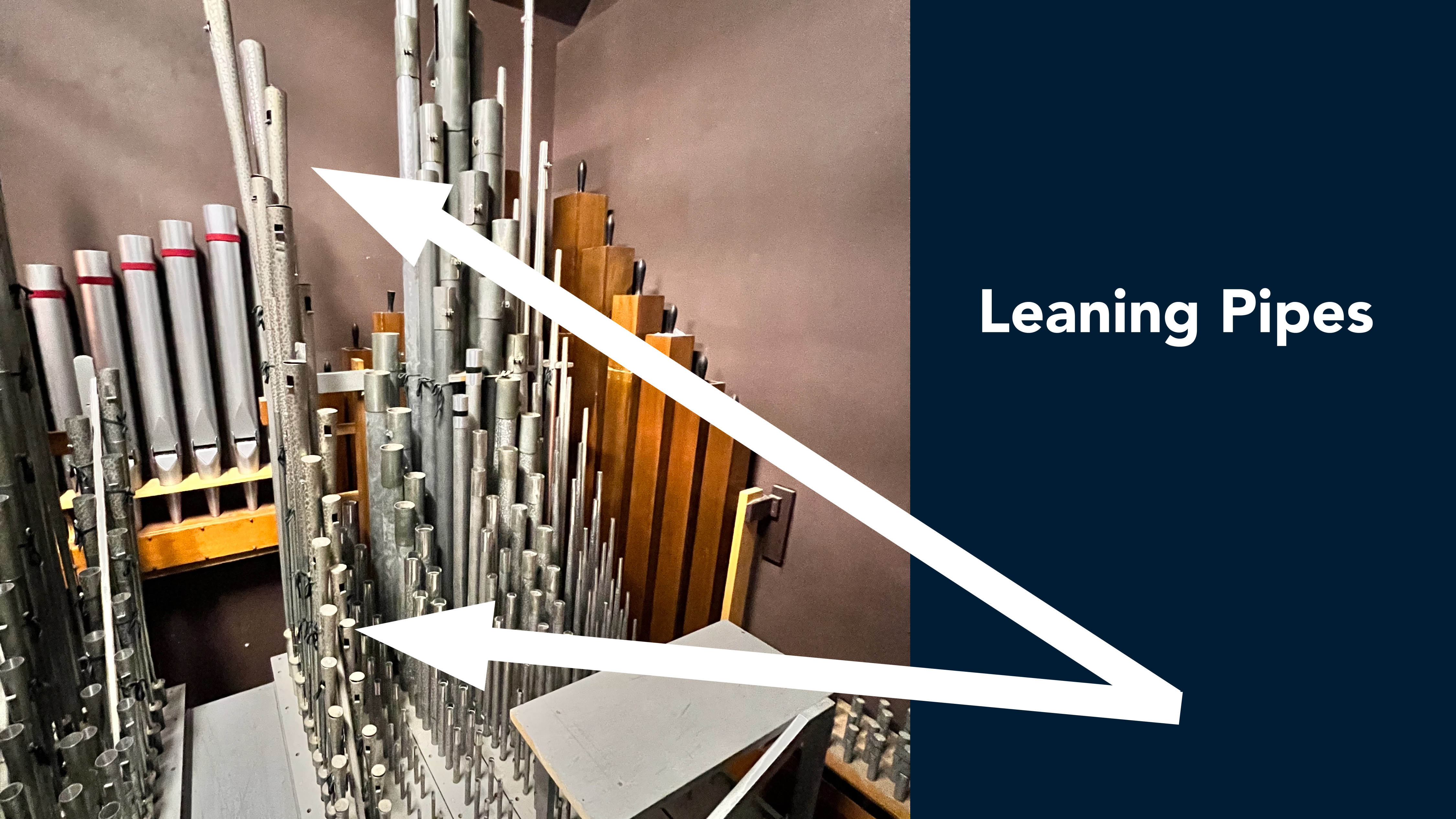
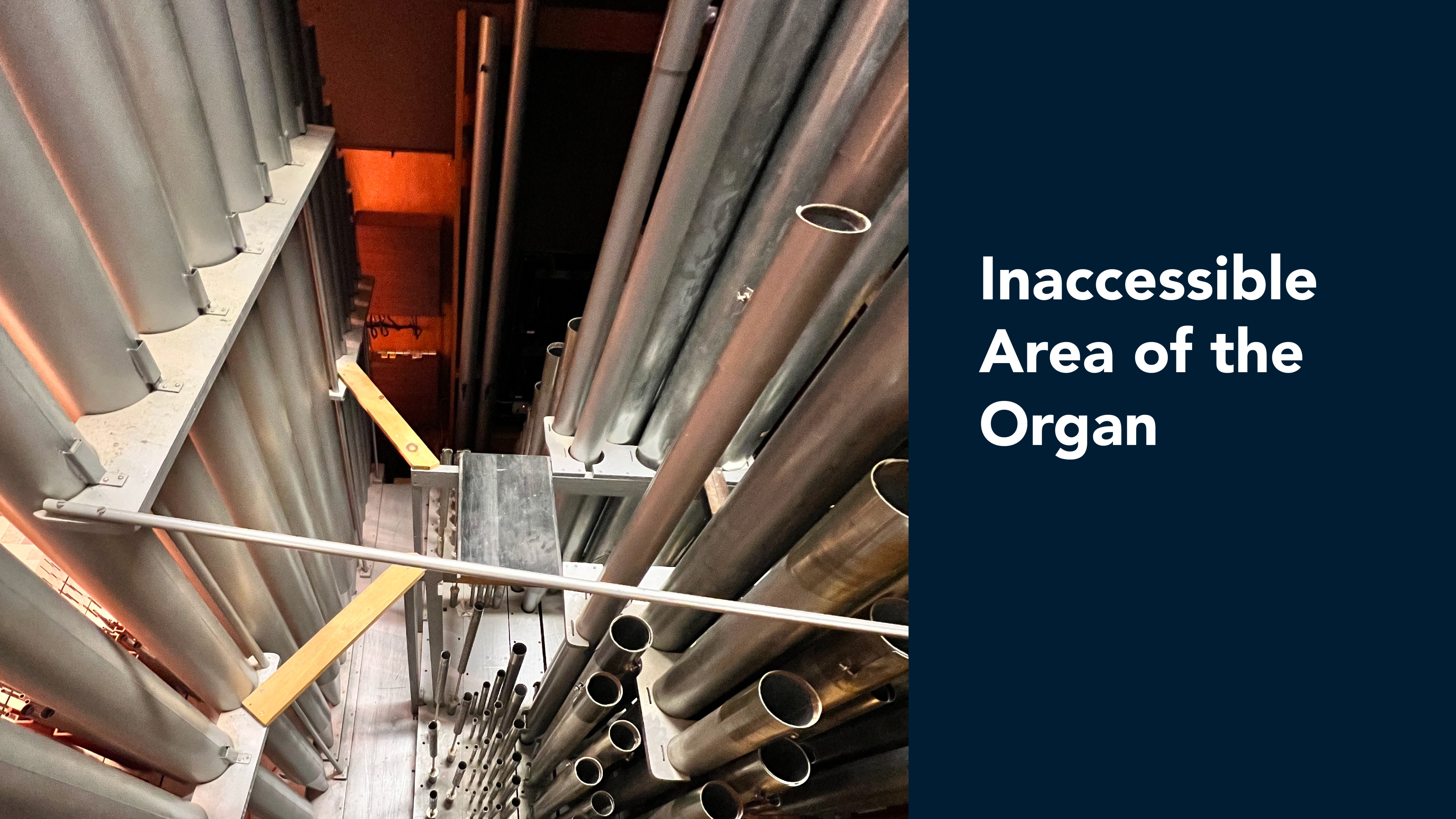
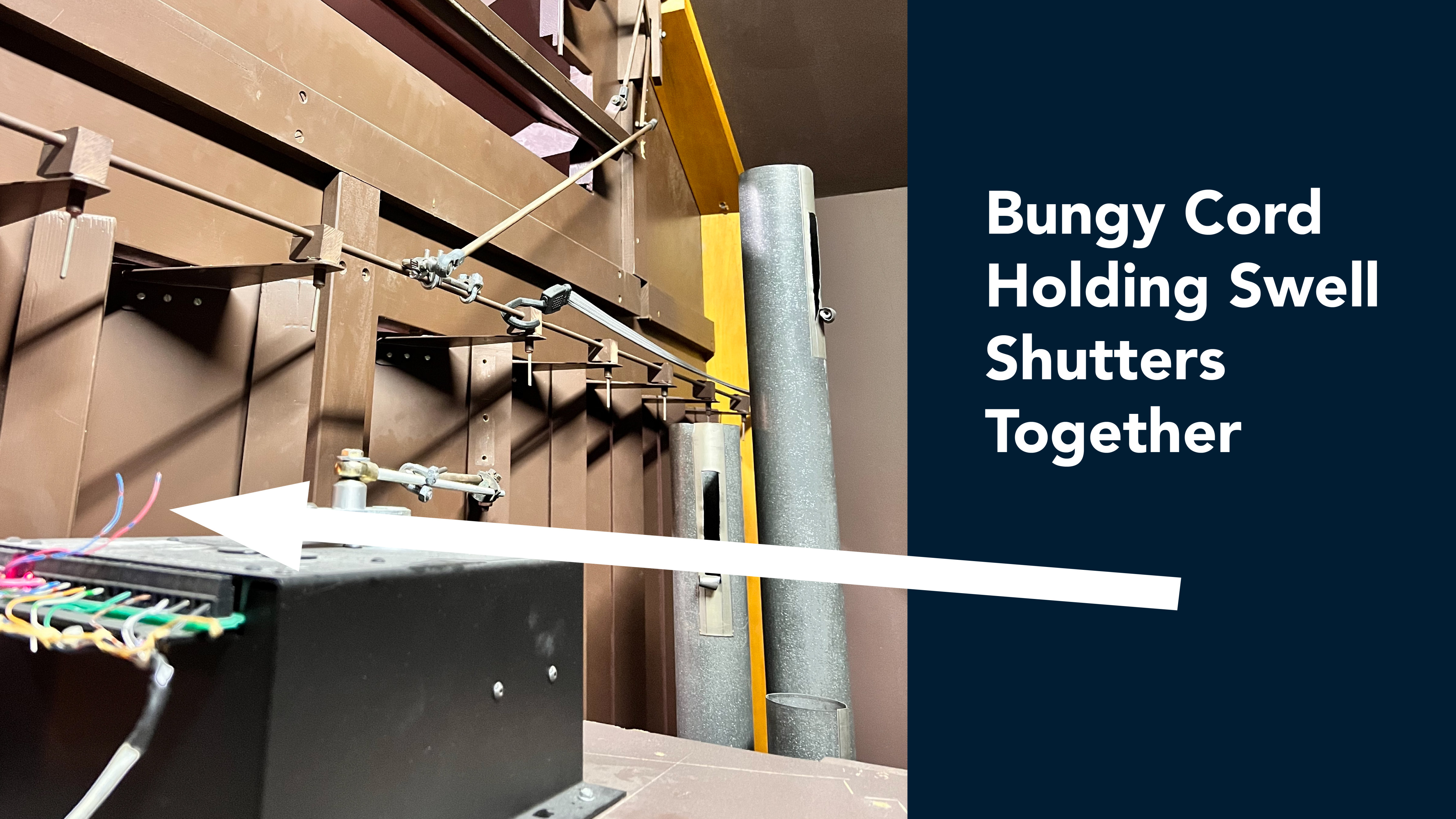
The photos below highlight some of the issues with the current organ, including makeshift fixes, leaning and missing pipes, and inaccessible areas.